Reference: Paul and Anne Ehrlich (2009) “Enough of us now”, New Scientist, 26th Sept 2009. Page number: 36,37
Reference: Paul and Anne Ehrlich (2009) “Enough of us now”, New Scientist, 26th Sept 2009. Page number: 36,37





 re its economic progress isn’t affected. The area of Climate Change brings in new avenues for people from all walks of life because we NEED man power at every level!
 t the end of the day, we had about 1700 sheets of paper.
 punched and piled up , we started stitching the books together and one by one everything fell into place.After a long, hardworking day, our books were ready with the greenShield mes
 sage inside and only one thing kept us from finishing up.....That was the peak of it all, when we gathered around to perform the long awaited 'sticker placing ceremony'** even after a very long day's work, turned out to be fulled with laughter and screams!
 ut of the papers we had remaining after the cutting process. Those were a hit too! as most people wanted a matching bookmark to go with their book. ha!
 ed the people of the Belaku Foundation* which employs village women in making paper and cloth ecofriendly products. We also invited the Kanyakumari Kalai Koodam (K4 -a women's self help groups which deas with articles made out of palm fibres), to come and sell their items.




 their raw data spreadsheets and photo albums. I had to prepare material for a leopard comparison software test run (which was seriously Cool)
For the college category, a grant of Rs. 75,000 was fought for. As you would have anticipated, Green Shield members DID work double-time for this project.
Team 1.
Chet, Madhu and Kee(Nanny):
Team 2.
Kat, Rosh and Sapna:
Team 3
Megs and Yogi:
In the prefinal round, there were four teams, 3 from MCC (woot!) and 1 from MS Ramaiah Arts and Science.
In the final round, 2 MCC teams competed against MS Ramaiah. The panel of judges included eminent people such as Ms. Sonia Shrivastava, CSR Head South Asia, Intel, Ms.Rashmi from TERI, Mr. Kumaraswamy from KSPCB, Mr. Pampa P Chowdhury, Branch Manager of Concern India Foundations and Mr. Suresh Heblikar, Chairman of Ecowatch.
 Under the time frame of 10 mins, all our schemes, bugeting and monitoring were quickly rattled out. Questions were asked and answered, with a wink and pageant smile... nay, we did better than that! We answered all questions as quickly and sensibly as possible. (Aich, Rosh! ;)

The event was a big deal for us, it involved alot of sleepless nights, sore eyes, neck, back and butt. So an acknowledgement is IMPERTIVE! :)
I would like to thank Intel for providing us with an fantastic platform to showcase our knowledge and skill. Mrs. Shobha Ma'am for being the brain of our projects and a backbone through the entire ordeal. I would also like to thank the Intel tea and coffee machine for being ever so patient and generous with Rosh and I, and for keeping up with our incessant requirements.
Thank you, one and all!
Say, free black lemon tea anyone?


1. The Plastic Problem:
Problem: Plastic, plastic everywhere,
in all the bottles, bags, and tupperware!
Unlike popular beliefs, the number within the triangle at the base, is not a reference to recycling capacity. It is just the composition or chemical make up of plastic.
 1) Polyethylene terephalate (PET)
2) High density polyethylene (HDPE)
3) Unplasticised polyvinyl chloride (UPVC) or Plasticised polyvinyl chloride (PPVC)
4) Low density polyethylene LDPE
5) Polypropylene (PP)
6) Polystyrene (PS) or Expandable polystyrene (EPS)
7) Other, including nylon and acrylic
Solution: So, what you can do is simply collect all the plastic (ones which are clean- not moist) and send it to K and K plastics. This plastic waste management use plastic to make a mixture of tar and plastic to make smooth and durable roads. A smooth drive on Miller's road would concur what I just mentioned!
2) The Cloth Clutter:
Problem: Maintaining a wardrobe can be painful, especially if you've kept c
Solution: Sending clothes to the charity is a good idea. Not only would you be helping a poorer section of the society, you'd also be saving up on fabric being processed.
Get creative! You could perhaps redesign your shirts and pants, all you need is a little inspiration and a tailor who understands your concept. Fabric can be used to make cloth bags as well! (Think about it, you could be a fashion guru at your college campus! wink wink)
3) The Gadget Garbage: Problem: Old CPUs, television and computer spare parts, emergency lamps, batteries contain heavy metals including mercury, zinc, lead, cadmium etc which when oxidised, effects the nervous system on acute exposure and on chronic exposure causes kidney and liver disorders.
Most wastes are either burnt or dumped in a landfill or at a waterbody. So finding high levels of heavy metals in the ground water tables are compounded at wastes dumps.
Solution: e-waste or electronic-waste can be given to a specialised group of people who involve in reusing the metals from e-wastes. The Indo-German-Swiss based group called e-waste have their headquaters in namma Bengaluru. A simple phone call and all your e-waste will be picked up from your residence or company. Browse through http://www.e-waste.in/ to get in touch with the people from your city.
4. The Paper Pile:
Problem: If you are a student this resource will be abundant in your room! Notebooks, 
Solution: Hunt down that paperwalla or recycle your own paper! the video in this url link can show you how. (www.metacafe.com/watch/820961/how_to_recycle_paper_homemade_letter_paper )
This is perhaps a good idea if you would like a personally made recycled-paper book. I can't vouch that the paper you make in the first batch can be used, but if you've got skill and patience, you'd eventually learn the trick of the trade.
Solution for impatient people: unused pages from old notebooks can be torn, collected and re-bound. :)
5. The Faulty Furniture:
Problem: As you would imagine most furniture like in the 1970's are made out of wood. The resource is not a renewable one, unless the industries take care to replenish the barren land with fresh tree saplings. How often is that? NOT that often!
If you are finding it difficult maintaining or finding space or you are tired of looking at your old furniture at your crib, there's only one practical solution to it.
Solution: EXCHANGE it for better furniture! Call an old furniture dealer or even your local carpenter! Not only are you being economical but environmentally friendly as well as the wood used could be broken down to make other furniture or some wood craft.
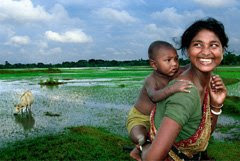
The 2008 Environmental Photographer of the Year exhibition includes images that are resonant, creative and beautiful.
Over 1,400 pictures were entered into the competition, examining issues such as poverty, climate change, human rights, leisure, culture, biodiversity and natural beauty. The categories were Changing Climates; Black & Veatch's World of Difference; Quality of Life; The Natural World; and a special Under 21 category which had no thematic boundaries.
The entries were judged on impact, creativity, composition, originality and technical abilities, by some of the most respected environmental photographers in the industry, including Gary Braasch, winner of the Ansel Adams Award for Conservation Photography, Anthony Epes and Ronnie Israel. Chris Smith, Chairman of the Environment Agency selected the final overall winner who became the Environmental Photographer of the Year.
Photographs were displayed from 17th September until 10th October 2008 at The Art Pavilion, Mile End Park, east London.
 I'm an environmentalist, but I like my comforts. Air conditioning I just can't do without.. because of global warming and pollution (like duh!) when I'm driving around in my car. I lecture people about alternate sources of energy and the depletion of fossil fuels, but my ride runs on petrol (unleaded of course!) and gives me 13km a litre!!! :)
“Nature doesn’t have a design problem. People do.”
(Quote from William McDonough and Michael Braungart)
You don’t need to be studying environmental science to have heard about global warming, pollution, or the fuel crisis. The environment is everything around us and its protection is something we hear about everyday. I have grown up conscious of saving electricity by switching off the lights and fans when I leave a room, reducing the amount of water I use, and recycling paper and plastic. Towards the end of high school however I had begun to wonder whether following the principle of “Reduce-Reuse-Recycle” was enough.
Recognising that environmental hazards are a pressing concern, most of us have the knee-jerk reaction of trying to curtail, or suppress the activities that lead to environmental damage. This approach at best only reduces pollution. While we are slowing down environmental degradation, we aren’t stopping it or repairing the damage already done. We are simply postponing the day we’ll have to deal with the real problem.
Given that the majority of environmental damage is caused by industrial activities, I believe the real problem is that environmentalists and industrialists are always in conflict. Environmentalists believe that industrialisation and economic development will only further deteriorate our already fragile environment. On the other hand, curbing industrialisation in an attempt to protect the environment is detrimental to economic growth! GreenFuel’s Emissions-to-Biofuels™ process brilliantly contradicts this typical viewpoint.
GreenFuel is a privately held, venture-backed firm that was started in 2001. They use sophisticated technology to profitably recycle CO2 from factory emissions by using photosynthetic algae. The process is fairly simple:
Factory emissions rich in Greenhouse Gases such as Carbon Dioxide and Nitrous Oxides, are fed through a “photo-bioreactor”. The process harnesses photosynthesis to grow algae in suspension, which captures the CO2 passed through the bioreactor. The algal cells obtain Nitrogen for nutrition from the Nitrous Oxides in the flue gas. In this way, huge amounts of CO2 and NOx are removed from exhaust before clean flue gases enter the atmosphere.
The bioreactor is designed to be retrofitted to flue stacks of fossil-fired power plants and other anthropogenic sources of carbon dioxide with minimal impact to ongoing operations.
Using commercially available technology, the algae can then be economically converted to solid bio-mass fuel, methane or liquid transportation fuels such as biodiesel and ethanol.
It is the production of this biodiesel as by-product that makes this technology so brilliant. Biodiesel can itself be used as a source of energy. On burning, it produces more CO2, but only the amount it used in forming itself. This very CO2 fuels and restarts photosynthesis if passed through the bioreactor again. As a result, it is possible to get three or four times the energy for the same amount of CO2. The circular nature of this process makes it virtually self sufficient and highly efficient. Consequently, the waste of the power production process becomes valuable input for the production of biodiesel, all while removing a large majority of Greenhouse gases from in-place factory machinery!
The biofuel produced is also a source of extra profit. This allows a factory to recycle its CO2 emissions efficiently, and make money as that happens.
We live in a world that has become very environmentally sensitive. Being environmentally friendly in technology and policy is not only necessary, it has also become acknowledged as sensible to be so. This acknowledgement is manifested in proactive stances such as signing of the Kyoto Protocol internationally, and setting up of a functional ‘Ministry of Environment’ whose clearance is needed before any new industry is set up.
However, while we recognise the need for environmental protection, it is not motivation enough to make huge lifestyle changes. The fact that the GreenFuel process is financially viable in addition to being environmentally friendly, makes it that much more attractive.
I stumbled upon the patented GreenFuel process while working – with my 3 teammates – on our submission for The Global Challenge Award, 2007. Our project was to propose a possible solution to Global Warming and to develop a functional business plan to sell this solution in three countries. Developing a business plan involved in-depth market and industry analyses in each country, along with a study of political and financial feasibilities of the process, specific to each country.
My team’s project presented the GreenFuel technology and bioreactor as what we thought was today’s best solution to Global Warming. We thought that the way the technology worked was brilliant – so simply, efficiently, self-sufficiently and innovatively. We proposed a business plan that aimed at selling the bioreactor and its technology to thermal power plants in India, the United States, and China – three of the world’s biggest contributors to Greenhouse gas emissions.
Power plants typically have the required space for the bioreactor to be set up, and also are capable of putting in the large initial investment necessary to start the process. Financially, we found that investments would be made up in a matter of three years. This is why we thought it best to initially propose this technology to power plants before expanding to other sources of Greenhouse gas emission. Politically, all three countries are under Kyoto Protocol and are very committed to being environmentally friendly.
While developing the business plan, my teammates and I read a book called “Cradle to Cradle – Remaking the Way We Make Things” by William McDonough and Michael Braungart. This book suggests that the problem is not that our machinery pollutes too much…it is that it pollutes at all. The authors of the book say that the key to sustainable development is in innovation of design.
Human beings have always been about innovation. At the beginning, necessity was the mother of invention. We would invent and innovate to fulfil a need. Once a need is fulfilled, technology can be improved on, to make it more efficient, cheaper, or more sophisticated. What we need is to add ‘environmental concerns’ to the list of factors that call for innovation of design.
It is impossible and unrealistic to expect massive changes in lifestyle or short term sacrifices from individuals or industry for long term goals of environmental protection for the so-called greater good of the future. While it is difficult to change the opinions of each member of society one-by-one by talking about environmental protection, money is something everyone relates to. I strongly believe that the solution to environmental problems lies in creating new design; for technology as well as for management principles; that works with the system instead of against it; technology that can be simple, efficient and profitable while being environmentally friendly.
It has become my passion to spread awareness about this new management and production philosophy; by mentoring other students through The Global Challenge Award process, through my own projects and presentations, and through other activities I take part in.
To take just one example, I have recently joined a Plastic Waste Management Project through my college. A company in Bangalore, called K.K Plastics collects plastic waste and converts the waste to power. This powder is being used to lay roads in five cities in India. This process utilises wastes that would otherwise be clogging up our drains, contaminating our water and soil, or poisoning our wildlife. One cannot deny the huge number of people involved in the production and use of plastic. We would be endangering the livelihood of these people as well as the development of any industry that utilises plastic, by banning its use. K.K Plastics, on the other hand, is utilising this non-biodegradable pollutant to address the crying need for better roads in India. This approach to plastic waste management is so much better than expecting people to stop using plastic all together.
Here too, the brilliance of the process lies in its innovation.
I believe that more people need to promote this kind of philosophy; that redesigning technology and policies is the key to sustainable development and a cleaner tomorrow. Particularly so, students of Environmental Science, Engineering and Management. Environmental concerns needs to be a factor of production and design, not a deterrent to economic activity. We, like GreenFuel and K.K Plastics, need to find ways to work with environmentalists AND industrialists, perhaps taking our cue from nature. After all, like the authors of Cradle to Cradle say… “Nature doesn’t have a design problem. People do.”


